
Western New York Freeze-Thaw and Foundation Movement Repairs
Western New York freeze-thaw and foundation movement go hand in hand, and most homeowners don’t see the damage until it shows up inside the house. Every winter the ground around your foundation freezes, and every spring it thaws, shifting soil in ways your home was never built to handle. Total Foundation Solutions can evaluate frost damage and foundation movement across Western New York. Our System Design Specialists evaluate how your foundation has moved and recommend the best foundation repair.
Knowing the warning signs and when to call a professional helps you act before a small crack becomes a major repair.
How Does Freeze-Thaw Cause Foundation Movement?
Moisture affects a foundation in more than one way, rain soaks the soil around your foundation, and when the cold settles in, the foundation pressure builds during the winter freeze. When spring arrives, the snowmelt can cause water to enter your basement. Jamestown weather repeats these freeze-thaw cycles, so the damage builds season after season.
Frozen Soil Pushes Against Walls
When water in the soil freezes, it expands and pushes soil upward and sideways against footings and basement walls. Repeated winters of that pressure can lead to cracked walls or bowing inward.
Thawing Soil Settles
When the ground thaws, the soil loosens and settles, often leaving gaps behind it. A foundation that loses support below it can sink or tilt, which leads to settlement cracks and uneven floors.
Heaving Slabs and Steps
Frost can lift concrete slabs, steps, and porches, and they don’t always return to level once the ground thaws. Uneven concrete looks rough and creates trip hazards around your home.
Wet Soil Adds More Pressure
If snowmelt or spring rain saturated the soil around your home, the pressure builds against your foundation walls.
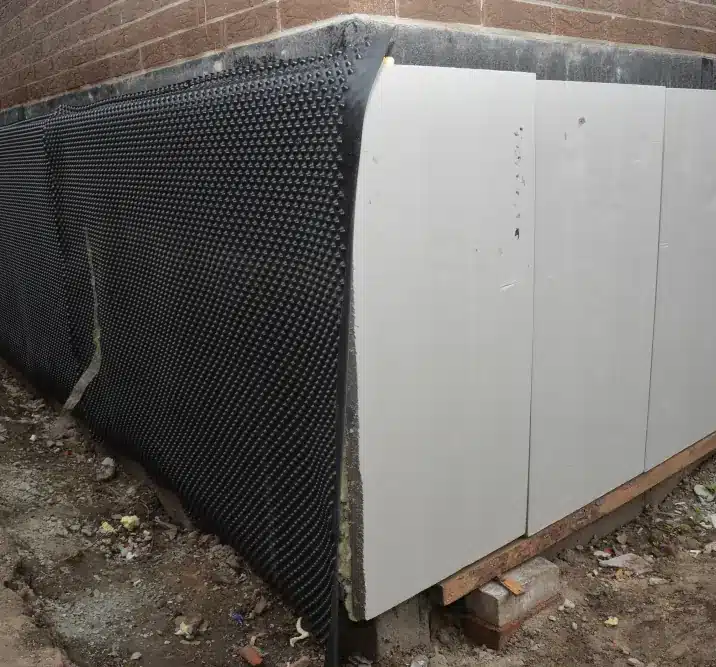
The Dangers of Foundation Movement
Foundation movement is more than a cosmetic problem. Left alone, it can spread damage through the rest of your home. Cracks widen, walls lean further, and floors slope more with each season, which makes the repair larger the longer you wait. Even a small sign deserves a prompt evaluation from a professional.
Symptoms to Look Out For
If frost damage worries you, our foundation repair team in Western New York can evaluate your foundation and explain what it needs. A basic understanding of the signs also gives you peace of mind and helps you protect your home.
Cracks in Basement Walls
Horizontal or stair-step cracks typically point to a bowing wall, while vertical cracks usually point to foundation settlement. Either type deserves a professional evaluation, since the force that caused the crack is still at work.
Sticking Doors and Windows
Doors and windows that stick after the ground thaws often mean the frame has shifted. An opening that no longer sits square usually means the wall around it has moved.
Sloping or Uneven Floors
A floor that slopes or feels uneven in one part of the house suggests the foundation beneath it has settled or moved. Small dips tend to grow as the soil keeps shifting.
Heaved or Sunken Concrete
Steps, porches, and slabs that tilt or drop show the soil below has moved. These changes also raise the risk of falls for family and guests.
Total Foundation Solutions Will Protect Your Home
The right repair depends on how your foundation moved. Wall stabilization systems hold a bowing wall in place against ongoing soil pressure, and piers support a settled foundation on stable ground below. We stabilize the structure instead of patching cracks, because filling a crack does not stop the force that caused it. PolyLevel® lifts sunken concrete slabs back into position.